
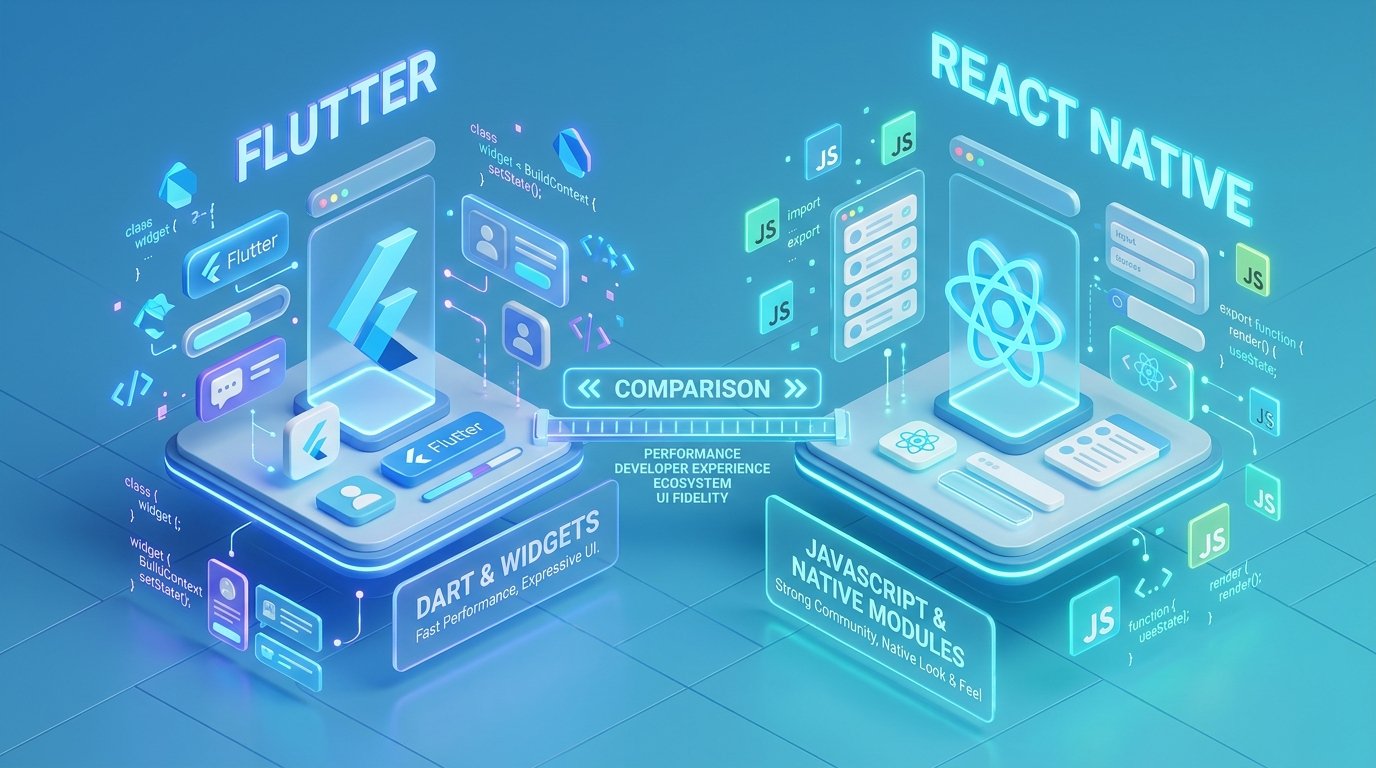
Selecting the right cross-platform mobile framework in 2026 remains one of the most critical architectural decisions for startup founders, CTOs, and product managers. For over half a decade, Google’s Flutter and Meta’s React Native have dominated mobile app development, rendering separate native iOS (Swift) and Android (Kotlin) codebases financially unnecessary for 90% of commercial applications.
However, the technological landscape has evolved dramatically. Flutter’s Impeller rendering engine has completely eliminated shader compilation jank on iOS and Android, while React Native’s New Architecture (Fabric and TurboModules) has removed the legacy JavaScript bridge in favor of synchronous C++ bindings. This guide provides an unbiased, production-tested breakdown of how both frameworks compare across performance, engineering costs, UI fidelity, ecosystem support, developer ergonomics, and long-term maintenance.
Whether you are building a consumer marketplace, a high-frequency fintech wallet, or an enterprise SaaS companion application, understanding these foundational differences will help you avoid costly technical rewrites and maximize engineering velocity.